
Chippewa County Arrest Log Sources
Chippewa County publishes no official 72-hour, weekly, or multi-day arrest blotter. What the Sheriff offers instead is different. The site carries a live In Custody List plus an active warrant table. Neither one is a historical booking log. Start with the current roster. Then treat archives and news as leads, keeping the publisher and capture date attached.
Each layer answers a different question. The official roster shows who the county held in custody at a given moment. RecentlyBooked runs an unofficial rolling county page covering about 30 days. Its counts and update label shift between visits. JailRosters.org stores dated snapshots, and the West Central Tribune reports selected events. None of them is a complete official arrest history.
Read the Chippewa County Blotter
Work backward from present custody. Starting with the live roster keeps an old mirror from being mistaken for current jail status. Note the URL, displayed date, and identifiers.
- Check the official In Custody List and record its visible timestamp.
- Match the name with an MNI, booking number, age, and Intake Date.
- Search dated JailRosters.org snapshots for a former roster state, labeling the result unofficial.
- Review the West Central Tribune topic archive for event context, not complete booking coverage.
- Use a written request for the source booking record when a live row has disappeared.
- Follow the court file for the disposition because the arrest log ends before the case does.
Use the Chippewa County 24 Hour Arrests workflow for strict same-day questions. It matches intake time against the live roster timestamp. The multi-day method works backward instead. It treats each publication as separate and never assumes one continuous county feed.
Chippewa County Log Entry Fields
The official roster holds the most reliable field inventory. A secondary PDF can mirror those columns. A news story may carry only selected names, search details, or court activity, so never fill missing cells by inference.
| Field | How to read it |
|---|---|
| Photo | Visible on the observed official roster and some mirrors; it is not proof of guilt. |
| MNI and Name | Use together with another field to reduce mistaken identity. |
| Sex and Age | Descriptive fields, not unique identifiers. |
| Booking # | The strongest reference when requesting the underlying booking record. |
| Intake Date | Shows intake timing, not when a web page was published. |
| Charges | Booked charges or abbreviated status, subject to later court change. |
| Bail/Bond | A financial or court-related field that does not itself prove custody. |
| Publisher date | A mirror or article date, distinct from arrest and intake dates. |
The live page can show older intake dates and labels like "COURT/PENDING" or "SENTENCED." That reflects custody rules, not a fixed archive period. A row can vanish after release, transfer, or correction. The county offers no release-history export either.
Chippewa Arrest News Is Event-Driven
The West Central Tribune Sheriff topic page is the strongest local news path for Chippewa County arrests. Its Load More archive reaches older stories. Coverage includes searches, first appearances, missing-person recoveries, and brawls. Some items sit behind a subscription. It is not a daily roster or a complete list of arrests in Montevideo, Clara City, Milan, or the rest of the county.
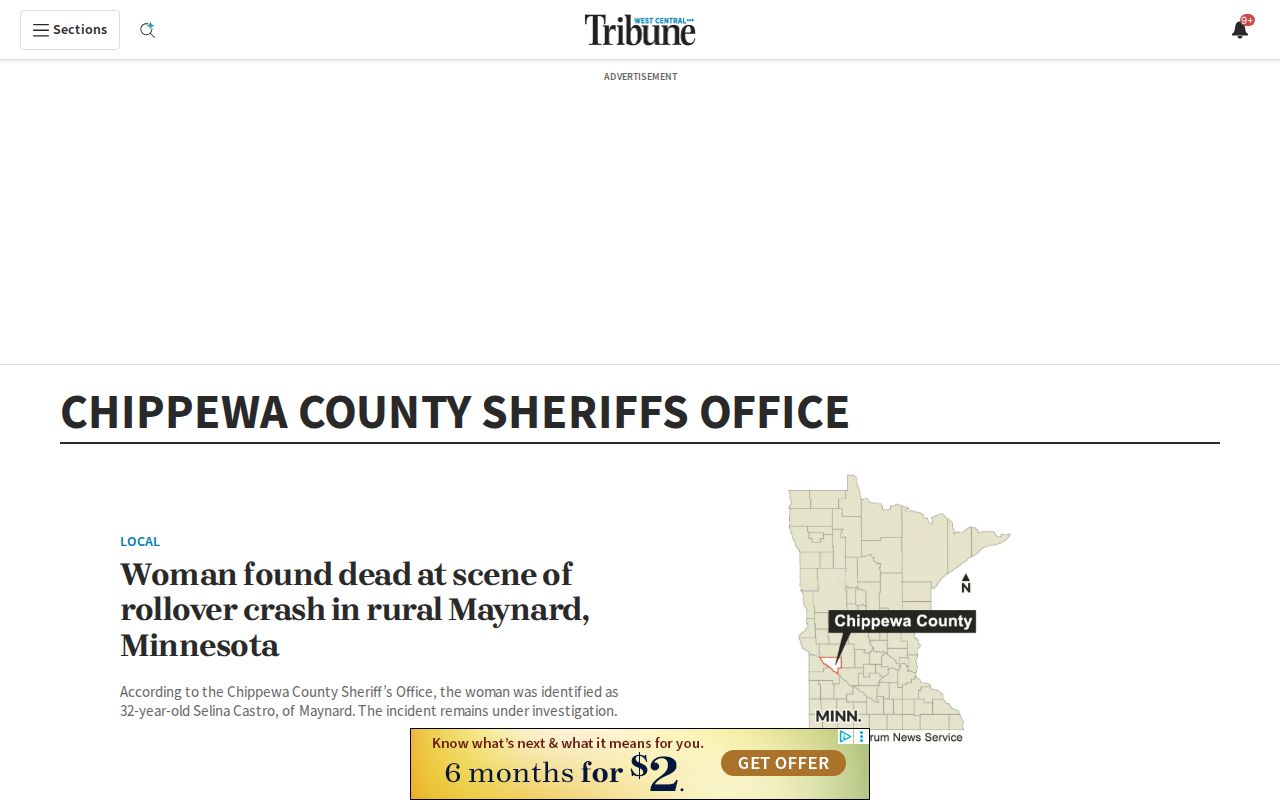
The archive is event-driven rather than roster-driven. Check each article's date and sourcing before trusting it. Then confirm custody and case status through official channels. A news report may blend agency releases, court documents, and the reporter's own work. That narrative can explain why an arrest drew attention, yet omit a booking number, show no photo, or describe a first appearance that came after the booking date. Selective coverage is not a crime count, and silence does not mean no arrest happened.
Chippewa Weekend Posting Limits
The county promises no weekend cadence, holiday schedule, or batch posting time for arrest records. A Monday surge would be a guess. So would a claim that the jail stops posting on holidays. Only two time signals are official. One is the live roster's page timestamp, and the other is each row's Intake Date. Check both whenever timing matters.
Secondary sites run their own refresh cycles. A late entry on a mirror does not prove the Sheriff delayed it, and a missing one does not disprove a booking. Weekend-published articles often describe older incidents. Preserve all three dates when you can: the event or arrest time, the jail intake time, and the publication time.
Chippewa Arrest Archive Snapshots
The dated JailRosters.org snapshot shows how an unofficial PDF can preserve a former view after the live roster changes. The live roster keeps changing.
The PDF is a lead, not a Sheriff-certified record. Cross-check its fields with the agency or a written request.
The site mirrors the official field pattern: photo, MNI, name, sex, age, booking number, intake date, charges, and bail or bond. No correction policy appears there. Its dated files can outlive the public county row. Availability still says nothing about completeness, accuracy, or current custody, so avoid redistributing the booking photos.
Unofficial Chippewa Rolling Results
RecentlyBooked's Chippewa County page is another secondary lead. The window rolls over about 30 days. Its result count and update date shift between visits. That constant drift is why any hard-coded arrest total goes stale almost immediately.
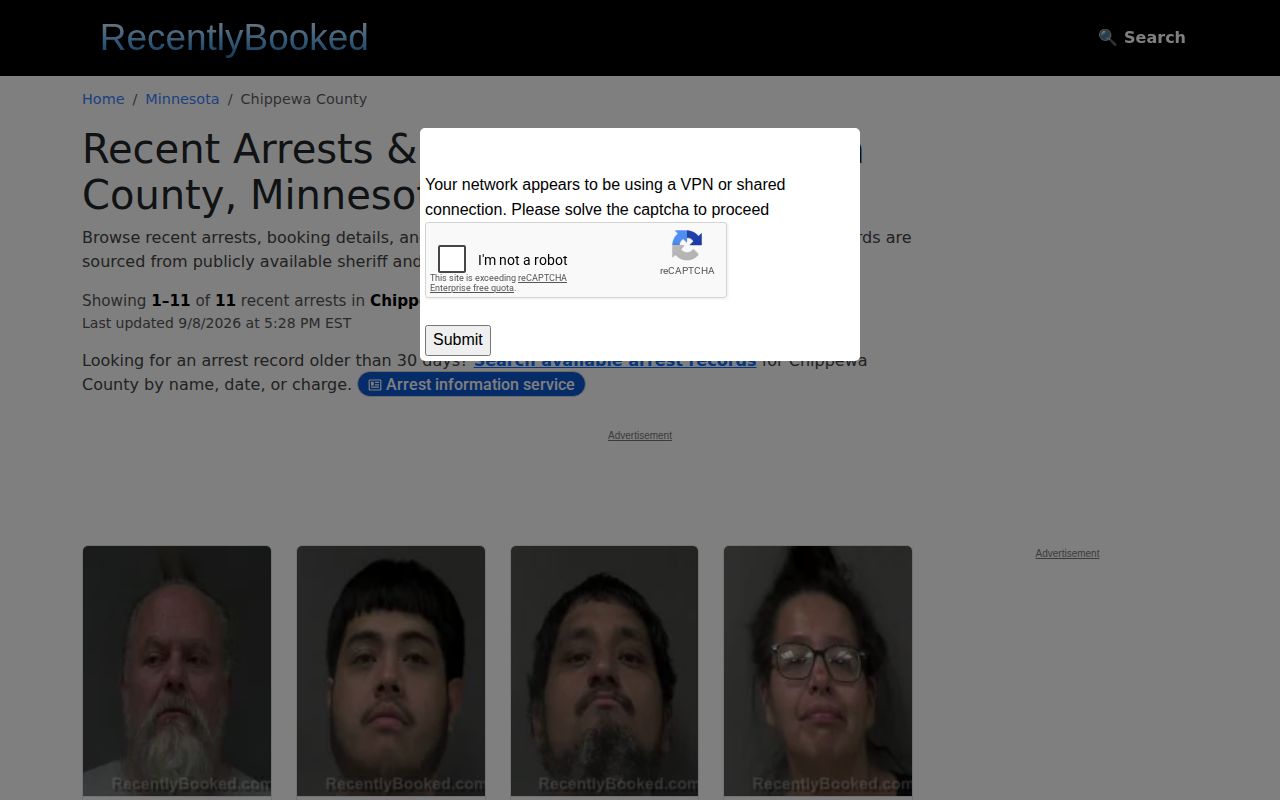
This screen can surface an older booking in Chippewa County, yet the Sheriff's Office does not maintain it. Official records come first. A copied booking photo that lingers online does not make an arrest current. Compare the source fields with care, then ask the Sheriff for the underlying record. Minnesota court records show how a case ended. The county page may list spots across Chippewa County without proving full city coverage.
Chippewa Arrest Records Past Roll-Off
Any live web page can vanish. Government retention rules work differently. Minnesota agencies dispose of records under approved schedules and Minn. Stat. § 138.17. The general county schedule is only an older planning baseline, though, not proof of Chippewa County's current adopted series. It sets separate periods for inmate-history summaries, identification files, adult indexes, and cancelled warrants. Real handling can change. Litigation holds, audits, open cases, or a newer schedule may all extend a booking record's life.
No booking-photo retention schedule specific to Chippewa County appears online. So ask the Sheriff directly. Which record series holds the arrest booking, and what schedule applies? Ask whether a hold exists and whether the record was transferred elsewhere. Get the destination and series title first. Only then contact the Minnesota State Archives or the Gale Family Library, since state-prison records sit apart from recent county jail bookings.
A strong written request names the person, the approximate booking date and time, the booking number, and the MNI. State whether you want inspection or a copy. Ask about fees. Request the statutory basis for any withheld part. The agency need not create a new arrest list. It can respond about an existing record, and keeping that reply with the archive URL helps later readers tell an old publication from the official source.
Federal Claims Need Separate Checks
Local news once quoted the Montevideo police chief and the Sheriff saying no ICE arrests had occurred in Montevideo. That statement is useful context. It covers one moment only. It cannot settle whether a particular person now sits in federal or immigration custody.
County, federal, and immigration systems are separate. The Bureau of Prisons locator tracks federal inmates. It is not a county booking-photo log. The ICE detainee locator covers qualifying ICE or recent CBP custody. Neither replaces the Chippewa roster. Check any federal claim with the responsible federal system and the relevant court, not an old county news item.
Chippewa Arrest Logs Stop Early
An arrest log marks the start of a case. It leaves out the full complaint, later amendments, any dismissal, a plea, the trial result, and the final sentence. Even a "sentenced" roster label only points onward. The court file holds what happened next.
Use Minnesota Court Records Online for public district-court records where available. Pending matters may not surface by defendant name alone. A case number or citation can make the difference. A failed name search does not prove the case is absent. For later procedural history, trust the court record over an unofficial archive or a news headline.